
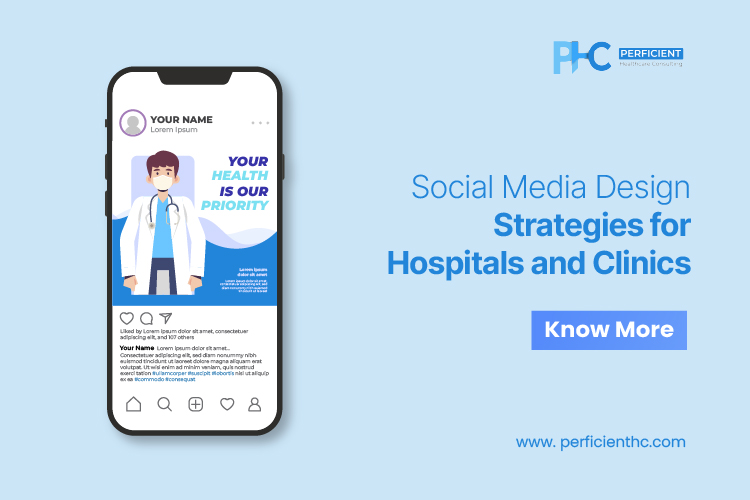
In today’s digital-first world, patients interact with healthcare brands online before they ever step into a clinic. This makes social media marketing for hospitals a critical part of building trust and driving engagement. A strong social presence not only reflects your brand’s credibility but also helps connect with patients on a personal level.
Design plays a central role in how hospitals and clinics present themselves online. From colors and fonts to content layout and imagery, every element influences how patients perceive care quality and professionalism.
1. The Role of Design in Healthcare Social Media Marketing
In healthcare, trust is everything. Your healthcare social media design should convey reliability, empathy, and authority. Choosing calm and clean color palettes such as blue, green, and white instills confidence and aligns with patient expectations of care and safety.
Typography also matters. Simple, easy-to-read fonts signal transparency and make content more approachable. Visuals should focus on people and real moments rather than stock imagery, creating authenticity and emotional connection.
2. Building a Consistent Brand Identity
Consistency is the foundation of effective hospital branding on social media. Whether it’s your logo placement, font style, or imagery, maintaining a unified visual identity builds recognition and trust. Every post should look and feel like an extension of your clinic’s mission and values.
Consistency also extends to tone and messaging. A calm, compassionate, and informative voice helps reinforce the patient-centric nature of healthcare communication.
3. Crafting an Engaging Social Media Strategy for Clinics
An effective social media strategy for clinics goes beyond promotional content. It focuses on education, empathy, and engagement. Patients trust clinics that share valuable health tips, awareness posts, and community updates.
Visual storytelling is key. Short videos, infographics, and carousels can simplify complex medical topics and encourage patients to take proactive steps in their health journey. Using patient testimonials and success stories also builds credibility.
4. Leveraging Design for Better Patient Engagement
Design-driven posts perform better on social media because they attract attention and are easier to understand. In healthcare digital marketing, visuals can transform complex data into accessible information. Use charts, icons, and color highlights to present facts clearly and encourage shares.
Interactive content like polls, quizzes, and Q&A sessions can increase engagement and provide insight into patient needs and preferences.
5. Measuring Design Impact and Optimizing Content
The success of your social media marketing for hospitals depends on how well your designs connect with audiences. Track metrics such as engagement rates, shares, and reach to identify what resonates best. Experiment with visual formats and optimize content for each platform like Instagram for visuals, LinkedIn for thought leadership, and Facebook for community updates.
Conclusion
In healthcare, social media design isn’t just about aesthetics, it’s about trust, communication, and connection. A well-designed presence can turn patient curiosity into confidence, and confidence into lasting relationships.
Partnering with a healthcare marketing expert like Perficient Healthcare ensures your brand not only looks professional but also speaks with authenticity and empathy across every digital channel.